Bingo Story – Bingo Games
- 4.1
- Rating
- 5.00M
- Installs
- Free
- Price
 Analysis by App-foxy
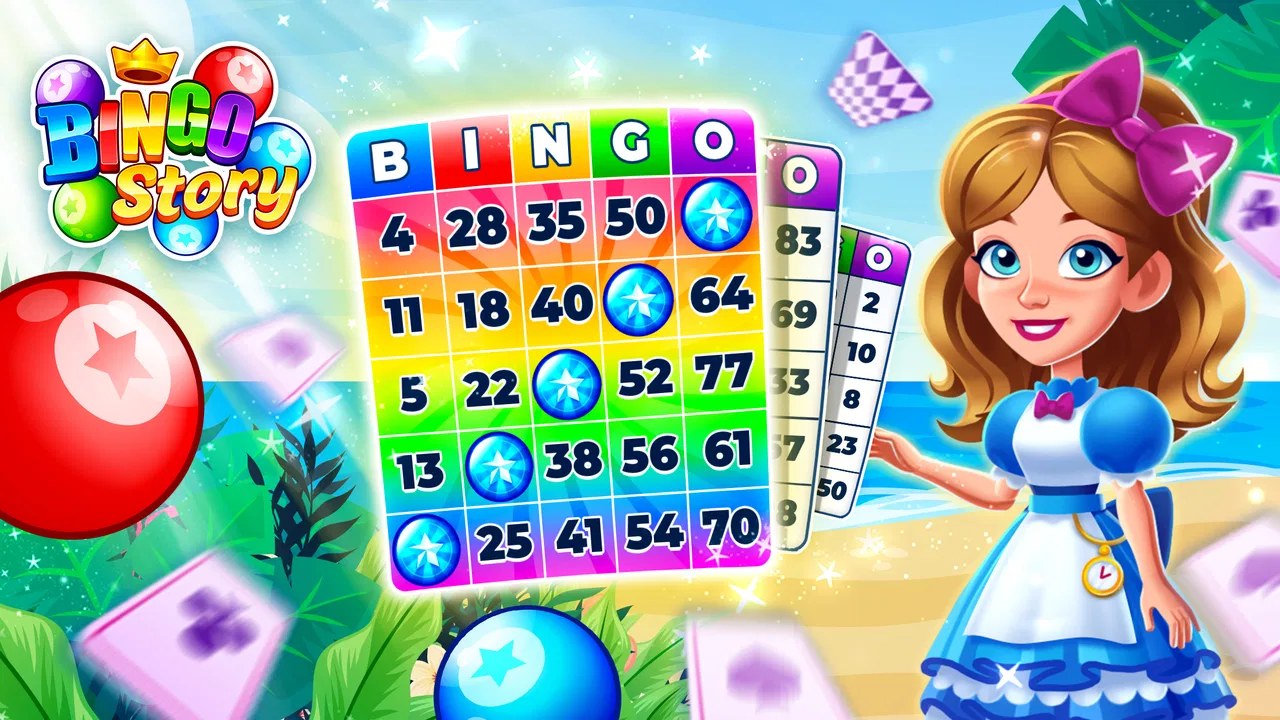
I spent time with Bingo Story as a casual board game, and my first impression was that it tries to make traditional bingo feel more like a small daily adventure. The basic appeal is easy to understand: you play bingo, work through puzzle-like goals, and take part in tournament-style activities rather than simply marking numbers until a card is complete. That extra structure gives each session a clearer purpose, especially when I only have a few minutes to play.
It is a free game from Clipwire Games Inc, available for players rated Everyone. The game has been around since December 20, 2016, and its current version is 1.72.0. With more than five million installs and an average rating of 4.1 from roughly one hundred thousand ratings, it has clearly found a sizeable audience. Those figures do not automatically make it the right choice for everyone, but they do suggest that the format has lasting appeal beyond a quick novelty.
How the early goals make bingo feel more purposeful
The strongest part of the opening experience is the way the game gives ordinary bingo rounds a sense of direction. In a standard bingo app, I can sometimes feel as if I am repeating the same action without knowing why the next round matters. Here, the combination of puzzles, tournaments, and bingo games creates a more obvious reason to continue. Even when the individual round is familiar, the surrounding objective helps it feel like one step in a longer session.
You May Also Like

 Blood Strike: 2.5 Anniversary
Blood Strike’s Loadouts Turn Every Drop Into a Tactical Gamble
A close look at Blood Strike’s custom loadouts: how fast access to signature weapons reshapes its battle royale rhythm, rewards preparation, and narrows the gap between fights.

 Pandora - Music & Podcasts
Pandora’s Music Is Easy to Start, but Harder to Recover
Pandora’s strength is its low-effort path from a seed to a station. Its weak spot is how much confidence it asks you to place in connection, setup, and quiet recovery.

 8 Ball Pool
 Is Built on Rivalries, Rematches, and Routine
A close look at the rivalries, rematches, shared routines, and unanswered safety questions that turn a quick pool match into a persistent mobile community.

 Samsung Music
’s Quiet Strength Is Playing What You Already Own
Its reach comes less from spectacle than from dependable access to a personal library. That simplicity is both the app’s strongest retention engine and its ceiling.

 AccuWeather: Weather Radar
AccuWeather Review: A Quick, Clear Forecast for Everyday Decisions
For everyday plans, the best forecast is the one you can understand quickly. AccuWeather makes rain timing, radar, and local conditions easy to act on, with a few trade-offs.

 Hill Climb Racing
Why Hill Climb Racing Still Turns Crashes Into One More Run
A tiny car, a bumpy hill and one more upgrade: Hill Climb Racing keeps resurfacing because its simple chaos makes every near-miss feel personal.
More From Our News Desk



That matters for new players. Bingo is simple to understand, but a completely bare-bones version can become dull quickly. Bingo Story gives the early play a little more context, so I am not only waiting for the numbers I need. I am also thinking about what the current activity is asking me to accomplish and whether another round will move me closer to a useful milestone.
I found this especially suitable for short breaks. If I am waiting for an appointment or winding down before bed, I can play a round without needing to learn complicated controls. The game is approachable enough for someone who already enjoys bingo, while the puzzle and tournament framing gives a more game-like reason for a player who normally wants more structure from a mobile title.
One useful habit is to decide before starting whether I want a relaxed round or a goal-focused session. When I concentrate on the current objective instead of playing every available activity at once, the experience feels less scattered. This is a small change, but it helps prevent the game from becoming a stream of disconnected bingo cards.
What progress feels like during normal play
The progress signals are less about mastering a complicated rule set and more about seeing that my play is contributing to something. Completing bingo patterns, working through puzzle-related tasks, and entering tournament activities all help break the game into recognizable pieces. I like that because it gives me several ways to interpret a successful session: I may have finished a round, advanced an objective, or simply made progress toward the next activity.
That layered structure is more effective than a single win-or-lose result. In ordinary bingo, missing the final pattern can make a round feel wasted. In this game, the surrounding goals make the time feel more productive, even when the main result is not ideal. I would not call that deep progression in the role-playing sense, but it is a useful pacing tool for a casual board game.
Players who enjoy visible completion will probably respond well to this approach. I tend to stay engaged longer when I can identify a near-term target, such as finishing the next puzzle step or taking another shot at a tournament activity. The important point is to treat those signals as motivation rather than as a promise that every session will produce a dramatic reward.
My practical advice is to pay attention to the wording of each goal before spending time in a round. A player who starts clicking immediately may complete the bingo card but overlook the more valuable way to approach the activity. Reading the objective first takes only a moment and can make the session feel more deliberate. It also reduces the sense that the game is asking me to repeat content without a plan.
Challenge and the shape of the difficulty curve
Bingo Story is not built around the kind of direct skill challenge found in a strategy board game. The core outcome depends heavily on the numbers that appear, so difficulty is experienced through pacing, objectives, and the pressure to make a good choice during a limited session rather than through complex tactical decisions. That makes it easy to enter, but it also means players looking for consistently controllable mastery may find the challenge lighter than expected.
The puzzle and tournament elements add variety to the familiar bingo format, yet they do not completely change its nature. I still approach each round as a game of chance with goals layered around it. This is an important distinction: the extra systems can make bingo more engaging, but they cannot turn it into a fully skill-driven board game.
For me, the difficulty curve works best when I accept that some rounds are about steady progress rather than a perfect result. Trying to force a win every time creates unnecessary frustration, particularly when the numbers do not cooperate. A calmer approach—playing toward the current objective and treating a completed card as a bonus—makes the game feel more consistent.
There is also a trade-off in the way the game creates challenge. Because the basic controls are accessible, experienced players may want more strategic depth than the format provides. On the other hand, that simplicity is precisely why it works for casual users, older players, or anyone who wants a board game that can be understood without a long tutorial.
Where the pacing is enjoyable and where it can press too hard
The pacing is at its best when one round leads naturally into a clear next step. Puzzles provide a change of focus, while tournaments give sessions a more competitive flavor. Together, they stop the game from feeling like an endless identical loop. I enjoyed having a reason to switch between activities instead of treating every card as interchangeable.
Still, the retention design deserves a careful look. Bingo games are naturally repetitive, and adding goals can encourage me to keep playing longer than I originally planned. That is not automatically a problem, but it means I need to decide whether I am continuing because I am enjoying the round or because I feel close to completing something. The difference becomes noticeable during longer sessions.
The free entry point is helpful, but the game includes in-app purchases ranging from $0.99 to $199.99 per item. I would approach those purchases cautiously. A low-cost option may look harmless in isolation, yet repeated spending can change how a supposedly free pastime fits into a monthly budget. My recommendation is to set a personal limit before playing and avoid treating a purchase as a solution to a disappointing round.
This is also where the game may not suit everyone. If you dislike chance-based progression, recurring goals, or the temptation to spend while chasing a better result, a traditional physical bingo set or a simpler offline board game may be a better fit. Those alternatives offer fewer layers of progression, but they also remove much of the pressure that can come with a free-to-play mobile format.
How to use it without letting the routine become tiring
I get more enjoyment from the game when I use it as a short-session activity rather than an all-evening commitment. A realistic routine would be playing a few rounds during a commute break, checking whether a puzzle objective has moved forward, and then closing the app once the session stops feeling fresh. This keeps the goals useful instead of turning them into chores.
Another helpful approach is to separate experimentation from progress chasing. On one visit, I might focus on understanding how the current bingo activity feels. On another, I might pursue a tournament goal more seriously. Trying to optimize every activity at once makes the experience busier and can make ordinary losses feel more important than they are.
I also recommend paying attention to your own reaction to near-completion. If being one step away from a goal makes you want to spend money or continue far past your planned stopping point, that is a good signal to take a break. The game is designed to make progress visible, and that is engaging, but visible progress can also create pressure. Recognizing that early helps keep the experience recreational.
For families, the Everyone rating makes the game broadly approachable, but I would still explain the purchase model before handing it to a child. The bingo rules are easy to grasp, while the spending decisions require more judgment. The safest experience is one where purchases are restricted or discussed in advance, rather than left to impulse.
Who will enjoy it most
I would recommend Bingo Story to players who already like bingo but want more surrounding activity than a plain digital card. It is also a good option for someone seeking a low-complexity board game with puzzle and tournament flavor. The game works particularly well for short, repeatable sessions where a small objective is more satisfying than a long campaign.
It may appeal to players who enjoy gradual progress but do not want to learn a large collection of rules. The interface and basic concept are approachable, and the extra goals give familiar bingo rounds a reason to continue. Someone who prefers relaxed mobile games over demanding competitive titles will probably understand its appeal quickly.
I would be more hesitant to recommend it to players who want deep planning, complete control over outcomes, or a one-time purchase with no spending prompts. A dedicated strategy board game will offer richer decisions, while a physical bingo set will usually feel more social and less structured around ongoing progression. Bingo Story sits between those choices: more layered than basic bingo, but less tactical than a serious strategy game.
My verdict on the progression loop
After using it as a casual board game, I think the progression works because it gives bingo a sequence of small reasons to continue. Early goals make the first sessions feel directed, progress signals help ordinary rounds feel worthwhile, and tournaments and puzzles add enough variation to interrupt the most obvious repetition. The system is not radically deep, but it is well matched to the relaxed nature of the game.
The main limitation is that the underlying bingo experience remains chance-led. No amount of surrounding goals removes that uncertainty, so players who need every result to reflect a clear skill decision may lose interest. The free-to-play structure and wide range of optional purchase prices also mean that self-control is part of getting the best experience from it.
For my own use, I would keep it installed as a pick-up-and-play game rather than a title demanding daily attention. Its current version, 1.72.0, supports a mature game that has remained available since its original release, and the 4.1 average from about one hundred thousand ratings indicates a generally positive reception. I would not choose it over a social bingo night or a deeper board game, but I would choose it when I want quick rounds with more purpose than a plain number-calling app.
In the end, Bingo Story succeeds by giving a familiar game a gentle progression loop without making the rules intimidating. My strongest recommendation is to play toward clear goals, keep sessions comfortably short, and treat purchases as optional rather than necessary. If that balance suits you, this free board game offers an accessible way to turn spare minutes into a few focused bingo rounds.
FAQs for Bingo Story – Bingo Games
01What is Bingo Story – Bingo Games?
Bingo Story – Bingo Games is a mobile app that combines classic bingo with engaging storytelling elements. Players can enjoy traditional bingo gameplay while completing quests and unlocking new stories. Available on both Android and iOS, it offers a unique twist to the conventional bingo experience.
02Is Bingo Story – Bingo Games free to play?
Yes, Bingo Story – Bingo Games is free to download and play. However, it includes in-app purchases for additional items and power-ups, which can enhance the gaming experience. Players can choose to make purchases to progress faster or enjoy the game entirely for free.
03What features does Bingo Story – Bingo Games offer?
Bingo Story – Bingo Games offers a variety of features, including multiplayer modes, themed events, and collectible items. Players can participate in live tournaments, join teams, and compete with friends. The game also provides daily rewards and challenges to keep the gameplay exciting and engaging.
04Can I play Bingo Story – Bingo Games offline?
No, Bingo Story – Bingo Games requires an internet connection to play. The game relies on online connectivity for multiplayer features, real-time events, and updates. Players need to be connected to the internet to fully enjoy all aspects of the game.
05How do I ensure my progress is saved in Bingo Story – Bingo Games?
To save your progress in Bingo Story – Bingo Games, it's recommended to connect your game to a social media account or cloud service. This ensures that your game data is backed up and can be restored if you switch devices or reinstall the app. Check the game's settings for backup options.
Pros
- Colorful and engaging graphics.
- Frequent updates with new content.
- User-friendly interface for easy navigation.
- Exciting social features and events.
- No forced ads during gameplay.
Cons
- Requires constant internet connection.
- In-app purchases can be pricey.
- Energy system limits playtime.
- Occasional connectivity issues.
- Some features locked behind paywall.

Bingo Story – Bingo Games
Gallery